In this article
- The Big Picture: Three Stages
- Stage 1: Mining Bauxite
- What is bauxite?
- How is it mined?
- The numbers
- Stage 2: Refining Bauxite into Alumina (The Bayer Process)
- The challenge
- How the Bayer Process works
- The output
- What about the red mud?
- Stage 3: Smelting Alumina into Aluminum (The Hall-Heroult Process)
- Why smelting is necessary
- The process
- The energy equation
- The output
- After Smelting: From Raw Metal to Industrial Products
- Alloying
- Casting
- Primary processing
- Secondary processing and finishing
- The Recycling Loop: Secondary Aluminum
- How aluminum recycling works
- The scale
- The Complete Journey: A Summary
- Why This Matters If You Buy Aluminum
- Frequently Asked Questions
- Conclusion
Aluminum is everywhere. It is in the phone in your pocket, the car you drive, the building you work in, the packaging around your food and the aircraft that crosses the sky overhead. The world produced roughly 73 million metric tons of primary aluminum in 2024, and demand continues to grow every year.
But here is something most people do not realize: aluminum never appears as a pure metal in nature. Unlike gold or copper, you cannot dig aluminum out of the ground in metallic form. It is always locked inside minerals, bonded tightly to oxygen and other elements. Extracting it requires one of the most energy-intensive industrial processes on the planet.
This is the story of how a reddish rock pulled from the earth becomes the lightweight, corrosion-resistant, endlessly recyclable metal that modern industry cannot live without.
The Big Picture: Three Stages
The entire aluminum production process can be broken down into three main stages:
Stage 1: Mining. Bauxite ore is extracted from the earth.
Stage 2: Refining. Bauxite is chemically processed into alumina (aluminum oxide), a white powder.
Stage 3: Smelting. Alumina is converted into metallic aluminum through electrolysis.
After these three stages, the raw aluminum is cast, alloyed and shaped into the products that industries actually use: sheets, plates, bars, profiles, wires and castings.
Let us walk through each stage.
Stage 1: Mining Bauxite
What is bauxite?
Bauxite is the primary ore from which aluminum is extracted. It is not a single mineral but a mixture of aluminum hydroxides (gibbsite, boehmite, diaspore) along with iron oxides, silica and other impurities. Its distinctive reddish-brown color comes from the iron content.
Bauxite forms in tropical and subtropical regions where millions of years of intense weathering have leached away other elements, concentrating aluminum-bearing minerals in the soil. The largest deposits are found in Guinea, Australia, Vietnam, Indonesia, Brazil and Jamaica (USGS).
How is it mined?
Bauxite is almost always surface-mined (open-pit mining). The process is relatively straightforward:
Vegetation and topsoil removal. The area above the bauxite deposit is cleared. Responsible mining operations store the topsoil for later rehabilitation.
Extraction. The bauxite layer (typically 4 to 6 meters deep) is broken up using rippers, excavators or blasting, then loaded onto trucks or conveyors.
Crushing. The raw ore is crushed to reduce it to a manageable size for processing.
Transport. Crushed bauxite is transported to a refinery, often located near the mine or at a port for export. Major bauxite-exporting countries include Guinea, Australia, Indonesia and Brazil.
The numbers
Global bauxite resources are estimated at 55 to 75 billion tons, enough to meet world demand for aluminum metal well into the future, and reserves at 29 billion tons. In 2024, approximately 450 million tons of bauxite were mined worldwide (USGS). It takes roughly 4 to 5 tons of bauxite to produce 2 tons of alumina, which in turn yields approximately 1 ton of aluminum.
Put simply: for every ton of aluminum in your warehouse, about 4 to 5 tons of rock were dug out of the ground somewhere in the tropics.
Stage 2: Refining Bauxite into Alumina (The Bayer Process)
The challenge
Bauxite contains between 30% and 60% aluminum oxide (alumina), but it is mixed with iron oxide, silica, titanium dioxide and other impurities. These must be removed before the aluminum can be extracted. The standard method for doing this has been the same since 1888: the Bayer Process, invented by Austrian chemist Karl Josef Bayer.
How the Bayer Process works
Step 1: Digestion. Crushed bauxite is mixed with a hot, concentrated solution of sodium hydroxide (caustic soda) inside large pressure vessels called digesters. The temperature ranges from 140°C to 270°C, depending on the type of bauxite. Under these conditions, the aluminum minerals dissolve in the caustic solution, forming sodium aluminate. The iron, silica and other impurities do not dissolve.
Step 2: Clarification. The mixture is transferred to settling tanks where the undissolved impurities sink to the bottom as a thick, red sludge. This is called “red mud,” and it is the primary waste product of alumina refining. The clear sodium aluminate solution is separated from the red mud through filtration and decanting.
Step 3: Precipitation. The clear sodium aluminate solution is pumped into large precipitation tanks and cooled. Fine crystals of aluminum hydroxide (alumina hydrate) are added as “seed” material to trigger crystallization. Over several days, aluminum hydroxide crystals grow and settle to the bottom of the tanks. The remaining caustic solution is recycled back to the digestion step.
Step 4: Calcination. The aluminum hydroxide crystals are washed and then heated in rotary kilns or fluidized bed calciners at temperatures around 1,000°C to 1,100°C. This drives off all remaining water, leaving behind a fine, white, sandy powder: alumina (Al2O3), with a purity of approximately 99.5%.
The output
The Bayer Process converts roughly 2 tons of bauxite into 1 ton of alumina. The alumina powder is then shipped (often across oceans) to aluminum smelters, which are typically located near abundant, cheap electricity rather than near the bauxite source.
What about the red mud?
Red mud is an unavoidable byproduct. For every ton of alumina produced, approximately 1 to 1.5 tons of red mud is generated. It is highly alkaline (pH 10 to 13) and contains iron oxides, silica, titanium and residual caustic soda.
Globally, over 150 million tons of red mud are produced each year, and most of it is stored in large containment ponds. Finding productive uses for red mud (in construction materials, soil remediation, iron recovery) is an active area of research and a growing priority for the industry.
Stage 3: Smelting Alumina into Aluminum (The Hall-Heroult Process)
Why smelting is necessary
Alumina is not metallic aluminum. It is a ceramic-like oxide compound, and the bond between aluminum and oxygen is extremely strong. Breaking that bond requires enormous amounts of energy, which is why aluminum smelting is done through electrolysis rather than traditional heat-based smelting.
The process
The method used worldwide since 1886 is the Hall-Heroult Process, independently invented by American Charles Martin Hall and Frenchman Paul Heroult in the same year.
Step 1: Dissolving the alumina. Alumina powder is dissolved in a molten bath of cryolite (a fluoride mineral, Na3AlF6) inside large steel containers called “pots” or “cells.” The cryolite acts as a solvent, lowering the melting point of alumina from over 2,000°C to about 960°C, making the process practical.
Step 2: Electrolysis. A powerful direct electrical current (typically 150,000 to 400,000 amperes) is passed through the molten bath. The current flows from carbon anodes suspended in the bath, through the dissolved alumina, and into a carbon cathode lining the bottom of the pot.
At the cathode (bottom), aluminum ions gain electrons and become liquid metallic aluminum, which collects as a pool of molten metal at the bottom of the pot.
At the anode (top), oxygen ions lose electrons and react with the carbon anode, producing carbon dioxide gas (CO2). The carbon anodes are gradually consumed in the process and must be replaced regularly.
Step 3: Tapping. Periodically (typically every 24 to 48 hours), the molten aluminum is siphoned from the bottom of the pot using vacuum crucibles. Fresh alumina is added to the bath to continue the process.
The energy equation
This is the critical factor in aluminum economics. Producing one ton of aluminum requires approximately 13,000 to 16,000 kilowatt-hours (kWh) of electricity. To put that in perspective, it is roughly the annual electricity consumption of one to two average households.
This massive energy requirement is why aluminum smelters are almost always located near cheap, abundant power sources: hydroelectric dams in Canada, Norway and Brazil; coal-fired plants in China and India; natural gas in the Persian Gulf states. The cost of electricity typically represents 30% to 40% of the total production cost of primary aluminum.
The output
A modern smelter contains hundreds or even thousands of electrolytic pots operating continuously. A large smelter can produce 300,000 to 600,000 tons of aluminum per year. The metal that comes out is approximately 99.7% pure aluminum.
After Smelting: From Raw Metal to Industrial Products
The molten aluminum from the smelter is not yet ready for most industrial applications. Several additional steps transform it into usable products.
Alloying
Pure aluminum is too soft for most structural and mechanical uses. In the casthouse (the facility adjacent to the smelter), alloying elements are added to the molten aluminum to create specific alloy compositions. Common additions include magnesium, silicon, copper, zinc and manganese, each producing different alloy series (1000 through 7000) with distinct properties.
The molten alloy is mixed thoroughly and then tested to verify the chemical composition meets the target specification.
Casting
The alloyed molten aluminum is cast into semi-finished forms:
Ingots and billets. Cylindrical or rectangular shapes that will later be extruded or forged.
Slabs. Large flat blocks that will be rolled into sheets and plates.
Wire rod. Continuous cast bars that will be drawn into wire.
Foundry ingots. Smaller forms used in casting operations to produce complex-shaped parts.
The casting process uses Direct Chill (DC) casting for most wrought products, where molten metal is poured into a water-cooled mold and solidified progressively.
Primary processing
From the cast forms, aluminum moves into primary processing, depending on the intended product:
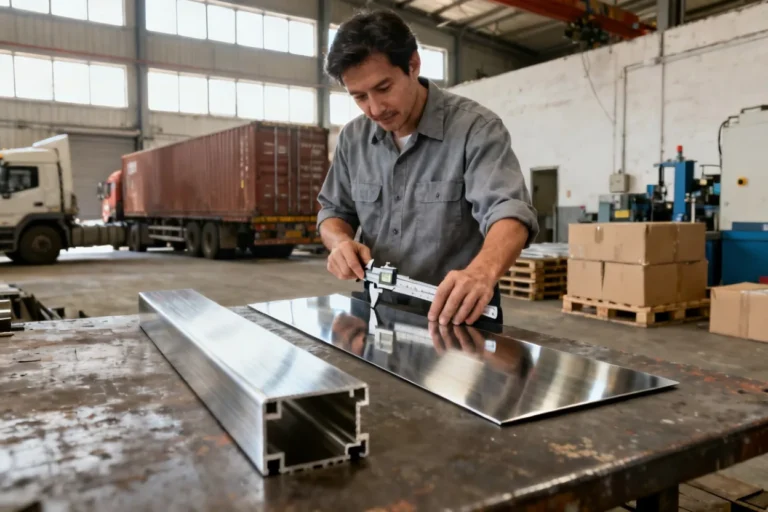
Rolling. Slabs are heated and passed through a series of rollers to produce sheets (thin, under 6mm), plates (thick, over 6mm) and foil (extremely thin, under 0.2mm). A single slab can be rolled from 600mm thickness down to less than 0.006mm for household foil.
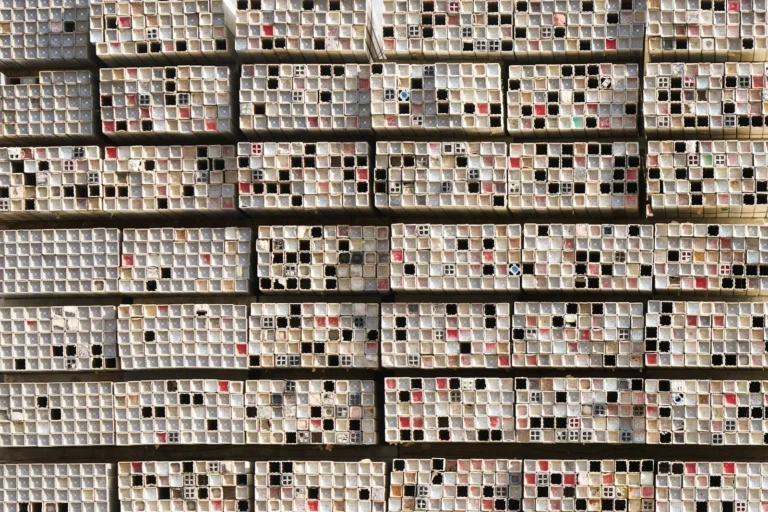
Extrusion. Billets are heated to around 400 to 500°C and pushed through a steel die under enormous pressure (up to 15,000 tons of force). The aluminum takes the shape of the die opening, producing profiles with virtually any cross-sectional geometry: tubes, channels, angles, complex architectural shapes and custom industrial profiles.
Forging. Billets or blanks are pressed or hammered into shape using dies, producing parts with superior grain structure and mechanical properties. Common in aerospace and automotive applications.
Drawing. Wire rod is pulled through progressively smaller dies to produce wire for electrical applications.
Secondary processing and finishing
After primary shaping, aluminum products often undergo:
Heat treatment. Controlled heating and cooling cycles (T4, T5, T6 and other tempers) to achieve specific mechanical properties.
Surface treatment. Anodizing, painting, powder coating, polishing or chemical conversion coating, depending on the application requirements.
Machining. CNC milling, turning, drilling and cutting to create precision components.
Fabrication. Welding, bending, riveting and assembly into finished structures.
The Recycling Loop: Secondary Aluminum
There is a second, parallel path for aluminum production that is becoming increasingly important: recycling.
Aluminum is one of the most recyclable materials on earth. It can be melted down and recast an unlimited number of times without losing its fundamental properties. And here is the critical number: recycling aluminum requires only about 5% of the energy needed to produce primary aluminum from bauxite.
That means producing one ton of recycled aluminum uses roughly 700 kWh instead of 14,000 kWh. The environmental and economic case for recycling is overwhelming.
How aluminum recycling works
Collection and sorting. Scrap aluminum (from construction demolition, automotive end-of-life, manufacturing offcuts, consumer packaging) is collected and sorted by alloy type where possible.
Shredding and cleaning. Scrap is shredded, de-coated (paint, lacquer and coatings are removed) and cleaned of contaminants.
Melting. Clean scrap is melted in furnaces at around 660°C. Alloying elements are adjusted to meet the target composition.
Casting. The recycled melt is cast into the same semi-finished forms (ingots, billets, slabs) as primary aluminum and enters the same downstream processing chain.
The scale
In 2024, recycled aluminum accounted for a growing share of global supply, with the trend accelerating as industries pursue sustainability targets and circular economy models. The automotive, construction and packaging sectors are the largest sources of recyclable aluminum scrap.
The Complete Journey: A Summary
| Stage | Process | Input | Output | Key Fact |
|---|---|---|---|---|
| 1. Mining | Open-pit extraction | Earth | Bauxite ore | 4-5 tons of bauxite per ton of aluminum |
| 2. Refining | Bayer Process | Bauxite | Alumina powder (Al2O3) | Invented in 1888, still the global standard |
| 3. Smelting | Hall-Heroult Process | Alumina + electricity | Molten aluminum (99.7% pure) | 13,000-16,000 kWh per ton |
| 4. Casting | DC casting | Molten aluminum + alloy elements | Ingots, billets, slabs | Alloy composition defined here |
| 5. Shaping | Rolling, extrusion, forging | Cast forms | Sheets, plates, profiles, wire | Extrusion creates custom shapes |
| 6. Finishing | Heat treatment, anodizing, machining | Shaped products | Finished industrial products | Temper defines final properties |
| 7. Recycling | Remelting | Scrap aluminum | New ingots, billets, slabs | Uses only 5% of primary energy |
Why This Matters If You Buy Aluminum
Understanding how aluminum is made is not just academic. It has direct implications for anyone who procures, specifies or designs with aluminum:
Price. Electricity costs (Stage 3) are the single biggest variable in aluminum pricing. When energy prices spike, aluminum prices follow. Knowing this helps you understand market fluctuations.
Quality. The alloy composition (Stage 4) and heat treatment (Stage 6) define the mechanical properties you receive. Specifying both correctly is essential for performance.
Lead times. Primary aluminum production is a months-long process from mine to finished product. Recycled aluminum has a significantly shorter supply chain, which can matter when lead times are tight.
Sustainability. The environmental footprint of your aluminum depends heavily on the energy source used in smelting. Aluminum produced with hydroelectric power (Canada, Norway) has a dramatically lower carbon footprint than aluminum produced with coal (China, India). Some buyers now specify “low-carbon aluminum” as a procurement criterion.
Supply chain. China produces nearly 60% of the world’s primary aluminum (USGS Mineral Commodity Summaries 2025). Understanding this concentration helps you assess supply risk and diversification options.
Frequently Asked Questions
What is bauxite? Bauxite is the ore from which aluminum is extracted. It is a reddish-brown rock rich in aluminum hydroxide minerals, formed by millions of years of tropical weathering. It is mined primarily in Guinea, Australia, China, Brazil, Indonesia and India, according to the USGS Mineral Commodity Summaries 2025.
Why is aluminum production so energy-intensive? Because the chemical bond between aluminum and oxygen in alumina is extremely strong. Breaking it requires electrolysis at high temperatures and currents, consuming approximately 13,000 to 16,000 kWh of electricity per ton of aluminum produced.
How much bauxite does it take to make aluminum? Approximately 4 to 5 tons of bauxite produce 2 tons of alumina, which yields roughly 1 ton of primary aluminum.
Is recycled aluminum as good as primary aluminum? Yes. Aluminum can be recycled indefinitely without significant loss of properties. Recycled aluminum undergoes the same alloying, casting and processing steps as primary aluminum, and the finished products are functionally identical.
Which countries produce the most aluminum? China dominates global production, accounting for nearly 60% of output in 2024, followed by India, Russia, Canada, the United Arab Emirates, Bahrain and Australia (USGS). However, production geography is increasingly influenced by energy costs, trade policies and sustainability requirements.
What is red mud? Red mud is the waste byproduct of the Bayer Process (alumina refining). It is a highly alkaline mixture of iron oxides, silica and residual chemicals. Approximately 1 to 1.5 tons of red mud is generated for every ton of alumina produced. Finding productive uses for it remains an industry challenge.
Conclusion
The journey from a tropical bauxite mine to a finished aluminum profile on your factory floor involves some of the most energy-intensive and technically complex industrial processes in existence. Understanding this journey helps you make better decisions about material selection, supplier evaluation, pricing negotiation and sustainability.
Whether you are sourcing aluminum for the first time or looking for a supplier that understands the full value chain from raw material to finished product, Allinx can help. We work directly with manufacturers and can advise on alloy selection, sourcing strategy and material specifications for your industrial project.
Technical notes on aluminum and metallurgical materials, in your inbox
New Insights articles on melt treatment, alloys, sourcing and logistics. Unsubscribe anytime.