In this article
- Why Degassing Needs Graphite
- How to Select Graphite Rotors for Aluminum Degassing
- Rotor Geometry
- Graphite Grade
- Service Life and Replacement Discipline
- Sourcing Graphite Rotors and Shafts from China
- How AL-LINX Supplies Graphite Components
- FAQ: Graphite Rotors for Aluminum Degassing
- How long do graphite rotors last in aluminum degassing?
- Can I buy rotors and shafts separately?
- What gas is used with graphite degassing rotors?
- Do rotors need anti-oxidation treatment?
- Does AL-LINX supply custom-machined rotors?
Graphite rotors for aluminum degassing are consumable parts with an outsized effect on metal quality. A worn or poorly matched rotor stops dispersing gas properly, hydrogen stays in the melt, and porosity shows up downstream in castings that already carry machining cost.
Selecting graphite rotors for aluminum degassing comes down to three decisions: rotor geometry for your degassing unit, graphite grade for your operating conditions, and a supplier whose machining and material quality stay consistent lot after lot.
This guide walks through all three, plus the sourcing checklist we apply at origin.
Why Degassing Needs Graphite
Molten aluminum absorbs hydrogen from humidity and combustion atmospheres. On solidification, that hydrogen forms porosity that weakens castings. Rotary degassing removes it: a spinning rotor injects inert gas (argon or nitrogen) and shears it into fine bubbles that strip hydrogen as they rise.
Graphite is the material of choice because it survives immersion in molten aluminum at 700 °C and above, resists thermal shock, and is not wetted by the melt. No practical alternative matches that combination at consumable-part cost.
How to Select Graphite Rotors for Aluminum Degassing
Rotor Geometry
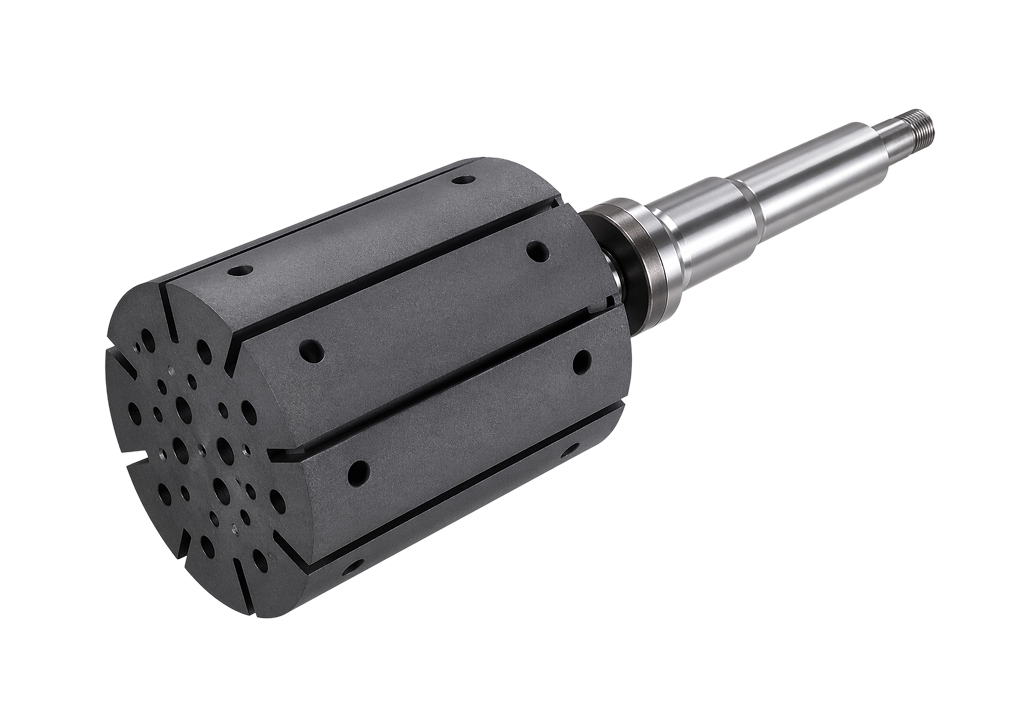
Rotor design determines bubble size and gas distribution. Common families include vaned rotors, notched or slotted heads, and pumping designs that combine stirring with gas dispersion. The correct choice follows your degassing unit’s specification: rotor diameter, shaft length, thread type, and rotation speed all must match the machine, not the other way around.
Graphite Grade
The properties that separate a 6-week rotor from a 6-day rotor:
| Property | Target range | Effect in service |
|---|---|---|
| Density | 1.75 to 1.85 g/cm³ | Higher density slows oxidation and erosion. |
| Grain size | Fine, uniform | Uniform wear, stable balance at speed. |
| Anti-oxidation treatment | Impregnated or coated | Extends life at the melt line, where oxidation concentrates. |
| Machining tolerance | Per drawing | Poor threads and runout cause vibration and early breakage. |
Service Life and Replacement Discipline
Under continuous operation, quality graphite rotors for aluminum degassing typically last 4 to 8 weeks; shafts usually outlast rotors. Track wear at the melt line, replace on schedule rather than on failure, and keep matched spares in stock: an unplanned rotor failure stops the degassing station, and with it, the casting line.
Sourcing Graphite Rotors and Shafts from China
China concentrates a large share of global graphite machining capacity, with strong clusters in Henan province. The quality range is wide, and rotor failures are expensive relative to the part price, so verification carries the day:
- Request material certificates: density, grain structure, and treatment applied, with measured values per lot.
- Send your drawing and require dimensional inspection reports against it, especially threads and concentricity.
- Confirm the machining workshop by name and verify it on site before the first order.
- Fix packaging in the contract: graphite is brittle, and rotors that survive the furnace do not always survive careless container loading.
Since rotors feed aluminum production lines, pair this sourcing decision with your alloying materials planning. Our guide to aluminum alloy types and series covers the metallurgy side, and our CIF vs FOB comparison covers the freight side.
How AL-LINX Supplies Graphite Components
AL-LINX supplies graphite shafts and rotors machined to drawing by certified manufacturers in China, with on-site teams that verify material certificates, dimensions, and packaging before every shipment. We coordinate logistics to Latin America, Europe, and other markets, and keep repeat orders consistent lot after lot.
Running a degassing station? Contact the AL-LINX team with your drawing or unit model and consumption rate.
FAQ: Graphite Rotors for Aluminum Degassing
How long do graphite rotors last in aluminum degassing?
Typically 4 to 8 weeks in continuous service, depending on graphite grade, anti-oxidation treatment, melt temperature, and rotation speed. Oxidation at the melt line is the usual failure zone.
Can I buy rotors and shafts separately?
Yes. Shafts generally outlast rotors, so most operations consume rotors at a higher rate. Threads must match exactly, which is why both should be machined to the same drawing standard.
What gas is used with graphite degassing rotors?
Argon or nitrogen. Argon is more effective per volume and chemically inert; nitrogen is cheaper and adequate for many alloys and process windows.
Do rotors need anti-oxidation treatment?
For most operations, yes. Treated rotors resist oxidation at the melt line, where untreated graphite thins fastest, and typically repay their price difference in service life.
Does AL-LINX supply custom-machined rotors?
Yes. AL-LINX works from your drawing or your degassing unit’s specification, with dimensional inspection at origin and full documentation on every lot.
Technical notes on aluminum and metallurgical materials, in your inbox
New Insights articles on melt treatment, alloys, sourcing and logistics. Unsubscribe anytime.