In this article
- Why China Dominates Magnesium Ingot Supply
- What Specifications to Verify When Buying Magnesium Ingots
- Purity and Chemical Composition
- Physical Format and Packaging
- How to Evaluate a Magnesium Ingot Supplier in China
- Documentation You Should Request Before Any Order
- Factory Verification
- Red Flags That Should End the Conversation
- Logistics Considerations Specific to Magnesium Ingots
- A Practical Pre-Order Checklist
- What AL-LINX Offers for Magnesium Ingot Sourcing
- FAQ: Working with a Magnesium Ingot Supplier in China
- What is the standard purity for magnesium ingots used in die casting?
- How is magnesium ingot shipped from China?
- What is the typical lead time for magnesium ingot orders from China?
- How do I verify that a Chinese supplier is a real manufacturer and not a trader?
- Does AL-LINX supply magnesium ingots to Latin America?
Choosing a magnesium ingot supplier in China is one of the highest-leverage decisions an industrial buyer can make. Magnesium ingot is a commodity with tight specifications and real consequences when those specifications are not met: a lot that arrives with impurity levels outside the agreed range, inconsistent grain structure, or inadequate packaging for sea freight can disrupt a casting line, affect alloy composition, and generate costly rejections downstream.
Finding a magnesium ingot supplier in China is not the hard part. China accounts for the majority of global magnesium output, and there is no shortage of sellers. The challenge is finding a supplier that consistently delivers to spec, documents every lot correctly, and does not disappear when something goes wrong.
This guide covers what to look for, what to ask, and what to verify before committing to a magnesium ingot supplier in China.
Why China Dominates Magnesium Ingot Supply
China produces roughly 85 to 90 percent of the world’s primary magnesium, with the main production centers concentrated in Shanxi, Shaanxi, and Qinghai provinces. The combination of large dolomite reserves, available reducing agents, and established industrial infrastructure has made Chinese production the default source for most global buyers.
The dominant production method is the Pidgeon process, a silicothermic reduction that yields commercial-grade magnesium with controlled purity profiles. For most industrial applications, including die casting, desulfurization in steelmaking, and alloy production, Chinese-origin magnesium meets or exceeds the required specifications when sourced correctly.
That concentration has a flip side: buyers in Latin America, Europe, and North America are almost always sourcing at a distance, which is exactly why verification, documentation, and logistics discipline carry so much weight when selecting a magnesium ingot supplier in China.
What Specifications to Verify When Buying Magnesium Ingots
Before contacting any supplier, define your specification sheet. A precise spec is the foundation of every meaningful conversation with a supplier and the standard against which every lot will be measured.
Purity and Chemical Composition
The most common commercial grades for magnesium ingot are 99.90%, 99.95%, and 99.98% Mg purity.
| Grade | Purity | Typical applications |
|---|---|---|
| Mg9990 | 99.90% | Standard die casting alloys (AZ91, AM60, AM50) and desulfurization. The most widely available and cost-competitive grade. |
| Mg9995 | 99.95% | Applications requiring tighter control of impurities (particularly Fe, Ni, Cu). Common in aerospace-adjacent alloys and higher-specification foundry work. |
| Mg9998 | 99.98% | High-purity grade for demanding alloy compositions, specialized chemical applications, and processes where trace impurities affect performance. |
Key impurities to specify limits for: iron (Fe), nickel (Ni), copper (Cu), silicon (Si), and manganese (Mn). Iron and nickel deserve special attention because even small excesses degrade the corrosion resistance of the finished alloy.
Physical Format and Packaging
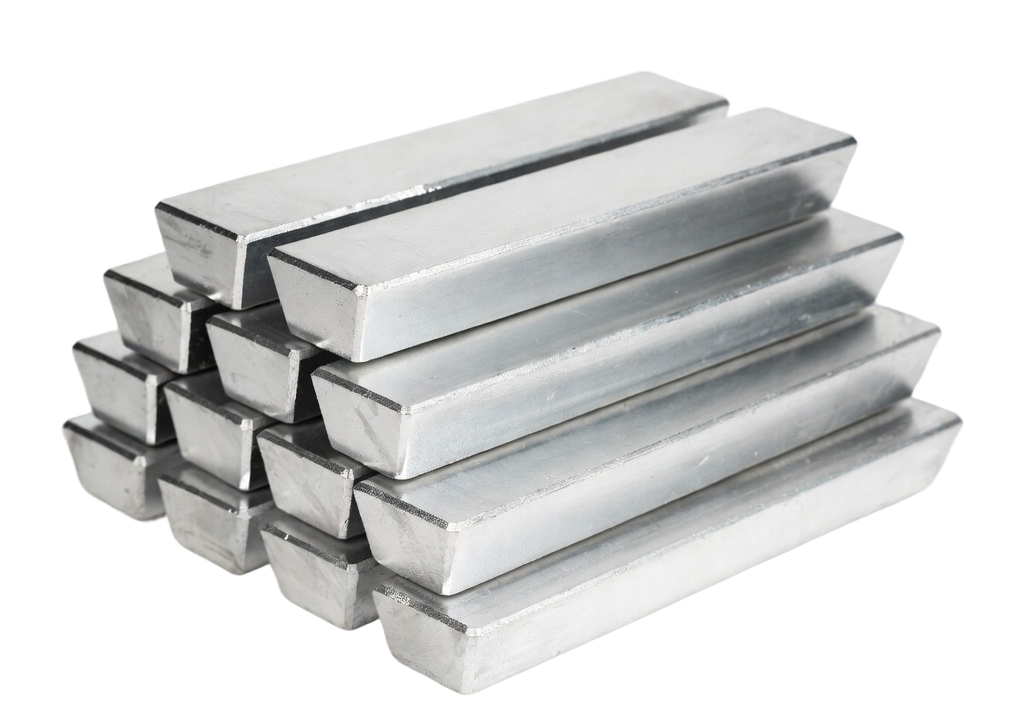
Magnesium ingots are typically supplied in standard formats: 7.5 kg or 8 kg individual ingots bundled in packs of 12 to 16 pieces, with total bundle weight around 100 to 120 kg.
Packaging for sea freight matters more than most buyers expect. Magnesium is reactive with moisture. Require sealed polyethylene inner bags, moisture-absorbing desiccant, and steel-banded wooden pallets rated for the actual stack weight. A supplier that treats packaging as an afterthought is telling you something about how the rest of the operation runs.
How to Evaluate a Magnesium Ingot Supplier in China
Documentation You Should Request Before Any Order
A legitimate magnesium ingot supplier should provide:
- A valid business license and export license.
- A Certificate of Analysis (CoA) for recent production lots showing the full chemical composition table with actual measured values.
- Third-party test reports from an accredited laboratory.
- References from buyers in your region or equivalent markets.
If a supplier cannot provide a CoA with actual values (not just “meets standard”), cannot name a testing laboratory, or cannot provide an export license, treat that as a disqualifying signal.
Factory Verification
A supplier presenting itself as a direct producer should be able to demonstrate three things: the facility has its own smelting capacity, the CoA reflects in-house testing, and production volume is consistent with the quantities being offered.
Verification is most reliable when done by a team with direct factory access, not solely through documents submitted by the supplier. Documents can be edited; a production line either exists at the stated scale or it does not.
Red Flags That Should End the Conversation
- Prices significantly below the published market range with no structural explanation.
- Reluctance to accept third-party inspection before shipment.
- A CoA that never varies between lots. Real production data shows natural variation within spec.
- Requests for full payment upfront with no escrow or letter of credit option.
- No verifiable physical address for the production facility.
Logistics Considerations Specific to Magnesium Ingots
Magnesium is classified as a flammable solid under IMDG regulations (UN 1869, Class 4.1). That classification shapes the entire logistics chain, and any magnesium ingot supplier in China you work with must handle it correctly. Key points to confirm:
- Correct IMDG classification and packaging certification for sea freight.
- Proper dangerous goods declaration and packing certificate.
- Compatibility with your destination port’s handling regulations.
- Insurance coverage appropriate for a reactive metal cargo.
Your Incoterm decision also matters more with dangerous goods than with general cargo, because it defines who manages DG compliance at each leg. For a detailed overview of how Incoterms affect your responsibility on metallurgical material imports, see our guide on CIF vs FOB for silicon metal imports: the same logic applies to magnesium.
A Practical Pre-Order Checklist
- Written specification: grade, impurity limits, ingot weight, bundle format.
- Business license, export license, and recent CoA received and reviewed.
- Third-party laboratory identified for pre-shipment inspection.
- Factory verified on site, directly or through a trusted local team.
- DG-compliant packaging and documentation confirmed with the freight forwarder.
- Payment terms with protection: letter of credit, escrow, or staged payments tied to inspection.
What AL-LINX Offers for Magnesium Ingot Sourcing
AL-LINX sources magnesium ingots directly from certified manufacturers in China, with on-site teams that follow production, verify documentation, and coordinate logistics from factory to destination. Every lot ships with a full Certificate of Analysis, third-party test verification when required, and complete export documentation.
Magnesium is also a core input for aluminum alloying. If you are specifying material for that use, our guide to aluminum alloy types and series covers where magnesium fits in each family.
Need verified supply with documentation you can audit? Contact the AL-LINX team and tell us your spec, volume, and destination port.
FAQ: Working with a Magnesium Ingot Supplier in China
What is the standard purity for magnesium ingots used in die casting?
The most common grade is Mg9990 (99.90% purity). This meets requirements for standard die casting alloys such as AZ91D and AM60B. Higher purity grades are used in more demanding alloy compositions.
How is magnesium ingot shipped from China?
Magnesium ingot is classified as a flammable solid (UN 1869, Class 4.1). It ships in sealed polyethylene bags on steel-banded wooden pallets, with full dangerous goods documentation including a packing certificate and DG declaration.
What is the typical lead time for magnesium ingot orders from China?
From order confirmation to departure: 2 to 4 weeks. Transit to Europe or Latin America adds 3 to 5 weeks depending on routing.
How do I verify that a Chinese supplier is a real manufacturer and not a trader?
Request the business license, export license, and a CoA from a recent lot referencing a named testing laboratory. A direct manufacturer will answer technical questions about production without hesitation and will invite factory verification.
Does AL-LINX supply magnesium ingots to Latin America?
Yes. AL-LINX supplies magnesium ingots to buyers across Latin America, Europe, and other markets, adapting Incoterms, documentation, and logistics to each destination.
Technical notes on aluminum and metallurgical materials, in your inbox
New Insights articles on melt treatment, alloys, sourcing and logistics. Unsubscribe anytime.