In this article
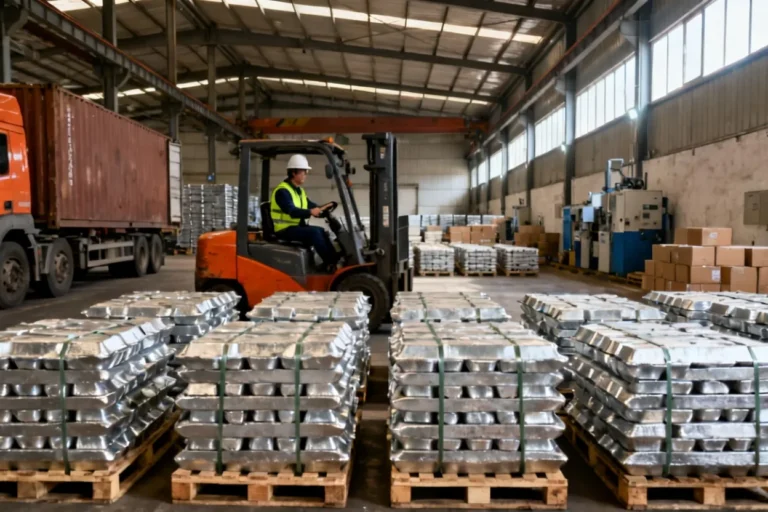
On 10 November 2026, Mercedes-Benz signed a binding offtake contract with Hydro that caps the carbon footprint of the low carbon aluminium it buys. Under the deal, Hydro will supply at least 10% of the carmaker’s primary aluminium from 2026. The footprint limit falls from around 4.0 kg CO2e per kg to 3.5 kg in 2028, and then to 3.0 kg from 2030, according to Automotive World. For a buyer, this puts the carbon figure inside the specification, on the same line as alloy and temper.
The market still pays very little for that attribute. However, a binding contract at the top of the automotive chain sends the same data request down to every extruder, foundry and parts maker that supplies it. This article covers what the contract sets, which benchmark it follows, and how a purchasing team can request and compare a carbon footprint figure.
What the Mercedes-Benz and Hydro contract specifies
The agreement covers at least 10% of Mercedes-Benz demand for primary aluminium and runs beyond 2030, Aluminium International Today reported. It also adds Hydro Circal from 2027. Circal is a recycled product with at least 75% post-consumer scrap. In other words, one contract carries two different products, and each one has its own carbon logic.
Both sides framed the deal in procurement terms. Jörg Burzer, Chief Technology Officer for Development and Procurement at Mercedes-Benz, said: “Aluminium is one of the most important levers in our supply chain.” Hydro CEO Eivind Kallevik described the mechanism from the producer side: “Long-term demand is the single most important investment trigger for decarbonising how materials are made.” That second quote explains why the contract is long and binding rather than a single order.
The benchmark behind 3.0 kg CO2e per kg
The 2030 figure has a public reference. In 2022, the First Movers Coalition set its aluminium procurement commitment, as published by the Aluminium Stewardship Initiative. Signatories commit that at least 10% by mass of the primary aluminium they buy each year will be low carbon aluminium by 2030. The coalition defines that metal as below 3 t CO2e per tonne, measured cradle-to-gate and excluding scrap input. There is also an optional commitment to source at least 50% of all aluminium from recycled sources by 2030.
This benchmark is from 2022, so it is context rather than news. The news is that Mercedes-Benz joined the coalition and committed to cover at least 10% of its primary aluminium by 2030. Therefore, the 3.0 kg cap in the Hydro contract matches the coalition threshold. A supplier that wants to quote into this chain now has a public number to measure itself against.
The low carbon aluminium premium is still small
Price signals point the other way. Fastmarkets assessed the European P1020A low carbon premium at USD 15-30/t on 2 October, against USD 10-25/t on 7 August, AL Circle reported. Paul Voss said there is “very little interest in paying for it”. He added that the Indonesian material the market expects does not count as low carbon.
So the value for the buyer sits elsewhere. First, the figure decides whether a supplier qualifies for a customer specification at all. Second, the same report recalls that CBAM came into force on 1 January 2026, which makes emissions data part of the import file in the EU. For the tariff side of that topic, see our notes on CBAM and downstream aluminium products and on the regional aluminium premiums for Q4 2026.
How to request and compare a carbon footprint figure
A figure without its method cannot be compared. For example, two suppliers can both quote 3.0 kg CO2e per kg and still measure different things. These questions make two figures comparable:
- Unit and boundary. Ask for kg CO2e per kg of metal and for the stated boundary. The coalition threshold is cradle-to-gate, so a figure with another boundary does not line up with it.
- Primary or recycled. The coalition definition for primary metal excludes scrap input. In contrast, Hydro describes Circal by its post-consumer scrap share. Keep the two in separate columns.
- Scope of the figure. Ask whether the number refers to the lot, the plant or a supplier average. A plant figure says little about a blended shipment.
- Verification. Ask who checked the figure and under which method. An unverified declaration is a starting point, and you cannot pass it on to your own customer as proof.
- Trajectory. The Mercedes-Benz contract steps down in 2028 and again from 2030. If your customer works the same way, ask suppliers what figure they can commit to for each contract year.
In practice, the simplest change is to add the carbon field to the request for quotation itself. That way the figure arrives with alloy, temper, origin and price, and the comparison happens before the negotiation. Our earlier note on secondary aluminium sourcing under CBAM covers the recycled side of this decision.
Why the exchange price does not answer the question
The LME reference says nothing about footprint, and current stocks show why that matters. Benchmark prices have fallen about 20% from the four-year high reached in June. Meanwhile, Russian aluminium made up 216,900 t, or 99.98% of available LME stocks, at the end of October, according to Reuters. The same Reuters poll sees the market moving from a 720,000 t deficit in 2026 to a 410,000 t surplus in 2027.
Origin data points the same way. China exported 594,000 t of unwrought aluminium and semis in October 2026, up 18.1% year on year and down 9.5% from September, SMM reported with Chinese customs data. January to October exports reached 5.916 million t, up 17.9%. Much of that semi-finished metal lands in Latin America and Europe, as we covered in China’s aluminium exports and trade diversion to Mexico. As a result, buyers have to request the footprint figure per supplier and per origin.
How a shift to surplus would affect the low carbon premium is uncertain. In one scenario, looser supply keeps buyers unwilling to pay extra. In another, binding contracts like this one keep qualifying metal scarce even in a surplus. The current data does not settle which applies.
What to do with this before the next order
Start with the suppliers you already use. Ask each one for its figure, its boundary and its verification, and record the answers next to the CBAM file. Then add the carbon field to every new request for quotation, with primary and recycled metal kept apart. If you sell into European automotive, check whether your customer has signed a low carbon aluminium commitment like this one, because the request will reach you through their purchasing terms.
Allinx can quote material delivered to destination, analyse the origin and the tariff that applies to it, and source with the group’s own logistics, including its team in Shenzhen. Nothing in this article is a price forecast or a recommendation to buy, sell or hedge.
Technical notes on aluminum and metallurgical materials, in your inbox
New Insights articles on melt treatment, alloys, sourcing and logistics. Unsubscribe anytime.